Utility path
$40kExample connection cost
Bring the grid to your home.
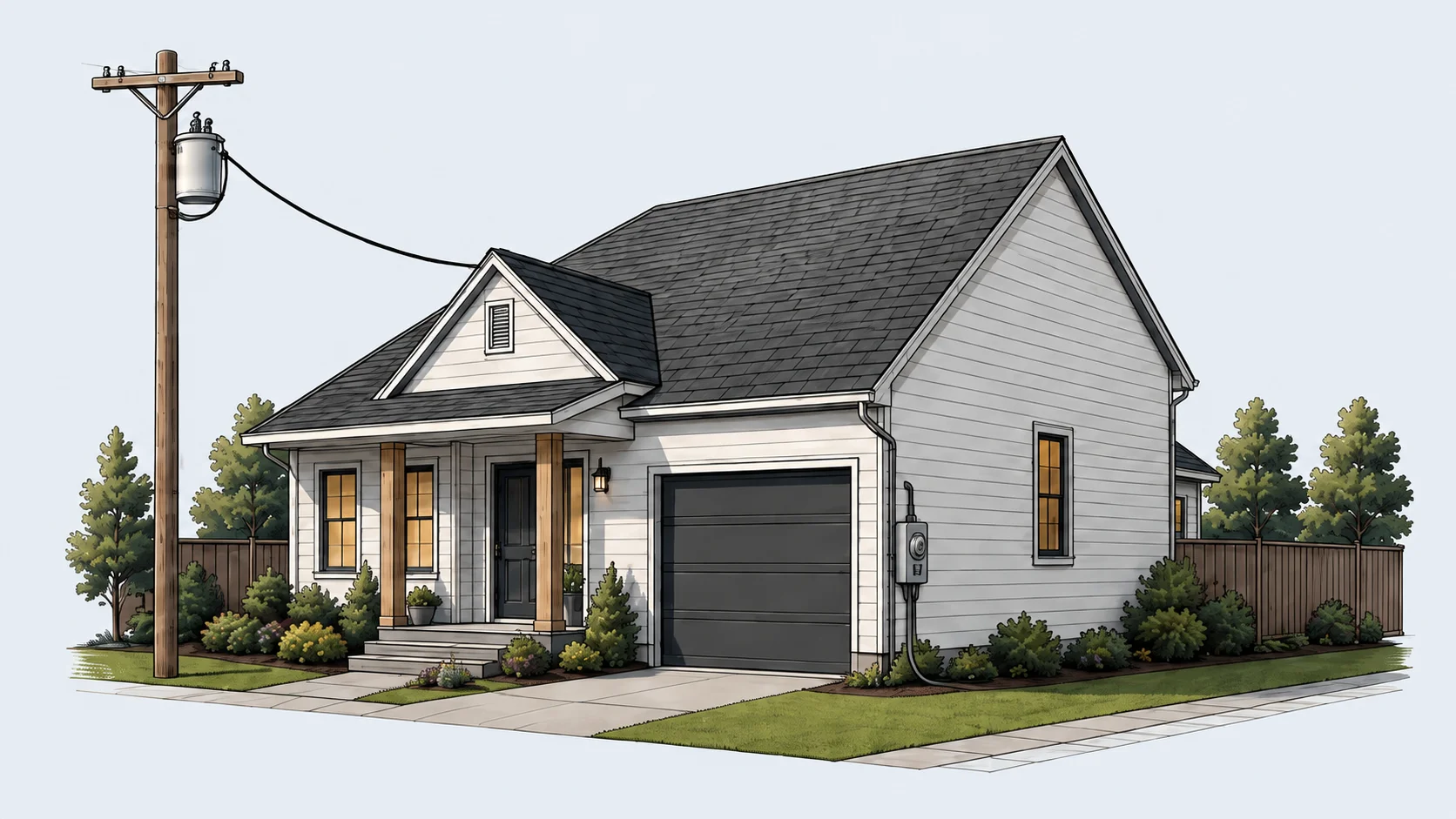
- Pay for the connection
- Buy electricity each month
- Utility rates can change
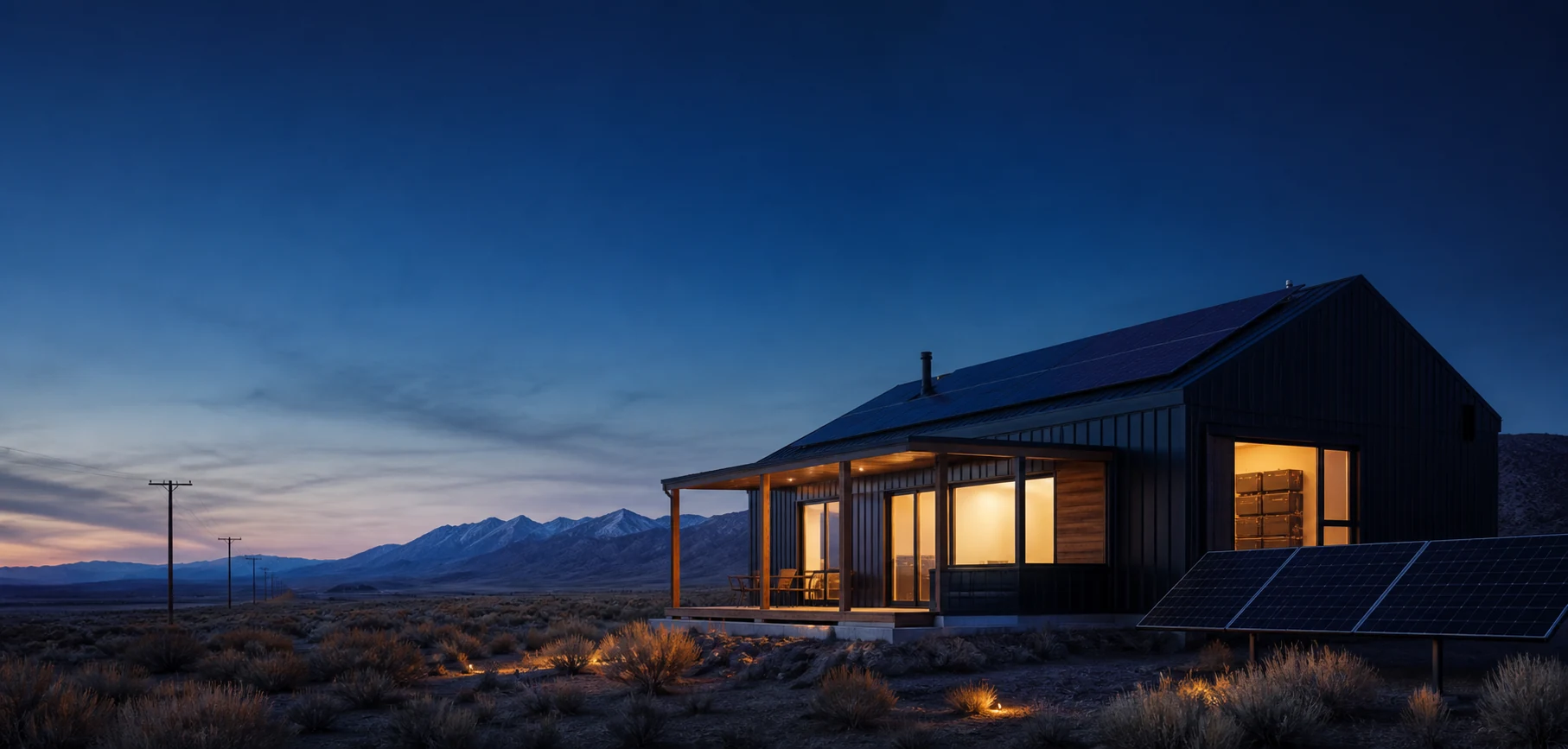
Independent power for new builds · 01
If your utility quote is near $40,000 to reach a new home, compare it with an independent power design for the same loads and reserve. One path buys a connection; the other buys generation and storage sized for your site.
The $40,000 figure is a long-extension scenario, not a national average. Published utility examples vary; some exclude trenching, conduit, or other project costs. Compare written, all-in quotes for the same loads and reserve.
Ungrid turns battery, solar, load, and weather data into alerts and daily guidance. Fully off-grid or still connected and working toward energy neutrality: put the system you own on watch.
See supported systems and monitoringVictron VRM and EG4 Cloud monitoring · Read-only · Start free
Use these chapters to understand the tradeoffs, then bring your loads, reserve needs, and written quotes to a local installer.
Request an installer introductionPay for capacity, not access
A utility-extension check disappears into trenching, poles, transformers, and service access. Solar, batteries, an inverter, and a backup plan become equipment at your home. When independent power costs less than the extension, the capital advantage begins at commissioning—not years later.
Utility path
$40kExample connection cost
Independent path
Your assetGeneration and storage you own
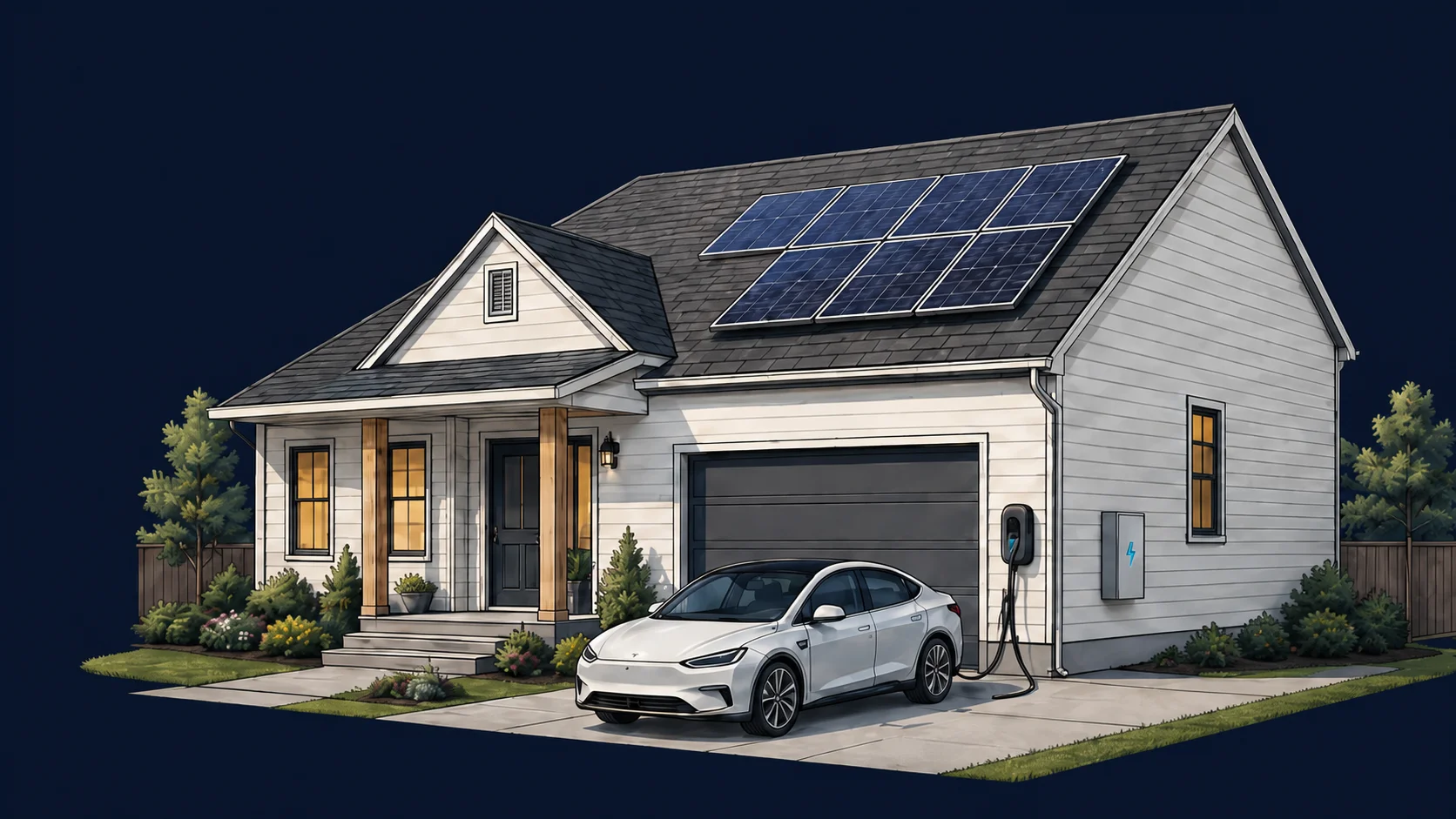
Your detached home · 20-year planning comparison
Start with your home and two quotes. See the costs side by side, from the first check to year twenty.
Enable JavaScript to calculate both paths from your assumptions.
Year 0 is the upfront cost. Years 1–20 are operating years. All values are future dollars, not inflation-adjusted purchasing power. Annual differences can turn negative in replacement years.
Annual difference = grid-path cost − independent-path cost. A positive difference favors independent power. The 20-year advantage includes the upfront difference once plus the 20 annual differences; it is not the sum of cumulative values.
| Year | Grid cost | Independent cost | Annual difference | Cumulative difference |
|---|
Starting assumptions: small / medium / large detached houses use 600 / 1,000 / 1,600 kWh per month. These are illustrative scenarios—not measured house-size averages. Heating, climate, pools and EVs can change use substantially. EIA's 2020 detached-house average was about 1,034 kWh/month.
Electricity references are EIA 2024 effective residential rates: California 31.97¢/kWh and U.S. 16.48¢/kWh. They are regional references, not current tariffs or detached-home average bills; fixed charges are already included. Rate source · Detached-house source
The example includes $600/year maintenance, $400/year backup fuel, 3% annual utility growth, 2.5% cost inflation, a $12,000 battery replacement in year 12 and a $4,000 inverter replacement in year 15. All are editable. It includes one replacement event for each component, not an annual replacement reserve. These are planning assumptions, not equipment-life guarantees.
Use all-in quotes including installation, site work, backup equipment and enough capacity for your loads. Existing owners should compare future spending only and set an already-paid connection to zero. Include remaining utility bills where applicable. EV demand belongs in the system quote and energy use; gasoline savings are not included.
Future-dollar cash-cost estimate, not investment return. Financing, incentives, taxes, opportunity cost and resale value are excluded. The model does not verify winter output, off-grid adequacy, hourly tariffs, export credits or changing loads. Account for upkeep and replacements needed to keep serving the same home.
Ready for numbers specific to your home?
Request an installer introductionPrivate by design: your inputs stay in this page.
No feeder. No rate case. No waiting.
The grid is optional.
Responsibility isn’t.
Your home does not have to wait for a feeder repair, transformer replacement, or truck roll. It does depend on disciplined design: measured loads, enough storage, an honest winter-solar model, critical-load priorities, and a tested backup path.
Residential infrastructure
Solar is mature infrastructure. DOE expects PV systems to operate for 20–30 years, while NREL found the large majority of systems it studied performed close to predicted production. The panels are proven. Design, installation, storage, and service decide the whole system.
Solid does not mean maintenance-free. It means planning for equipment failures before they put your critical loads at risk.
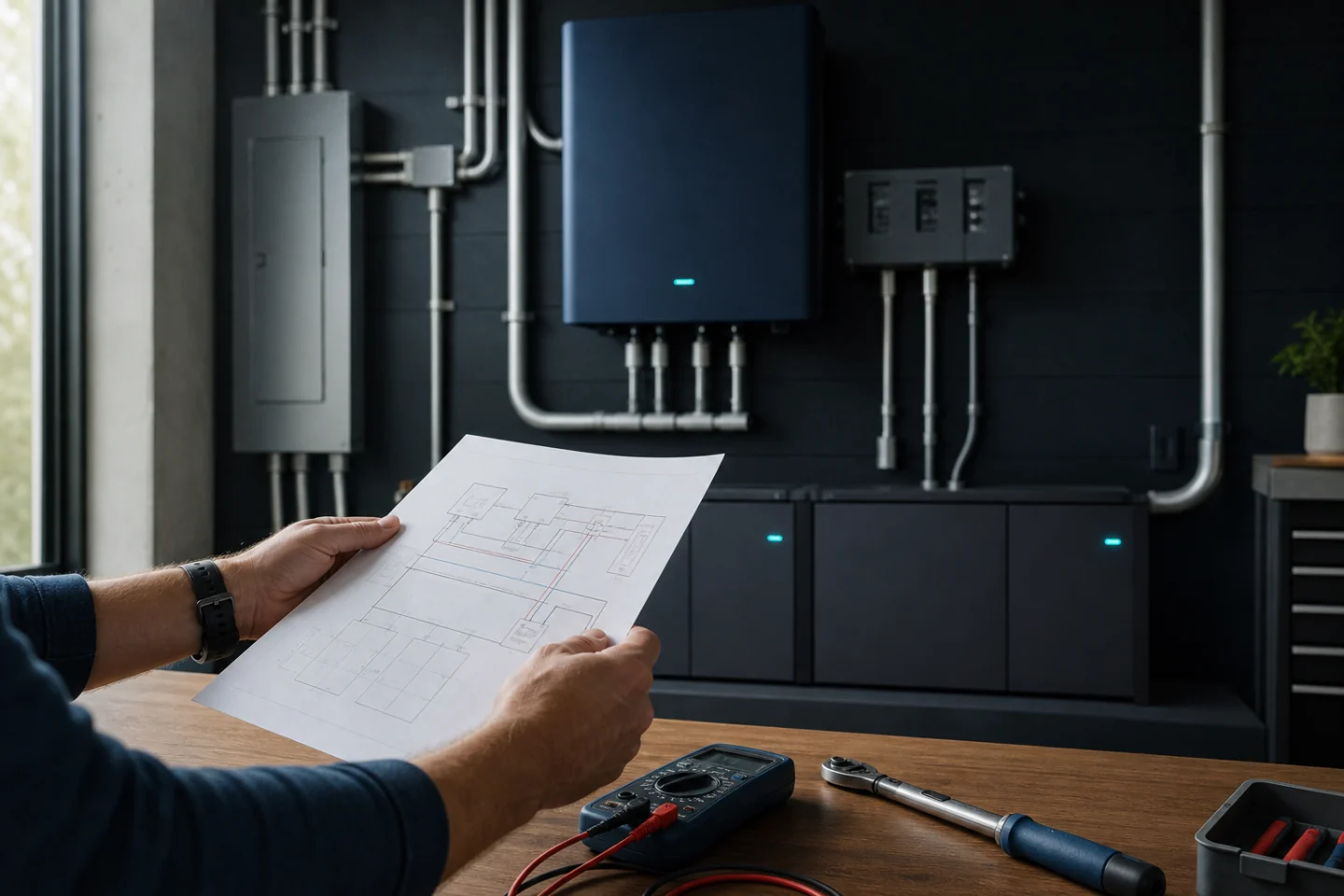
Understand every watt. Hire for every amp.
Do the load audit. Choose what must run and what can wait. Plan cable paths and future expansion. Learn the operating margin so your system never feels like a black box.
Bring qualified local professionals into engineered design, permitting, grounding, overcurrent protection, battery fire safety, service work, and commissioning. Ownership is the goal. Unsafe improvisation is not.
Installing for a customer? Make monitoring part of the handoff
Request an installer introductionA meter is a subscription
You can produce as much energy as you use and still owe the utility. Fixed charges, time-of-use prices, export credits, and interconnection rules are tariff decisions outside the homeowner’s control.
The policy may change. That is the point: the policy is not yours.
Make power where you use it
Panels and batteries are manufactured, mined, shipped, and eventually retired. Storage also loses some energy in every cycle. But solar has far lower lifecycle greenhouse-gas and air-pollutant emissions than fossil generation, and it produces power at the home that uses it.
Efficiency comes first. A tighter envelope and efficient loads mean fewer panels, fewer batteries, lower cost, and less material.
The cleanest system is the smallest one that reliably does the job.Your build. Your power.
Sign up with your ZIP code and build stage. Ungrid will review the request and email you if we identify an installer serving your area.
No equipment credentials. No exact address. No automated handoff.
Installer availability varies. Ungrid does not guarantee availability, workmanship, pricing, permitting, savings, or system performance. Verify licensing, insurance, references, scope, warranties, and local requirements before hiring.
From conviction to operation
Ungrid helps homes, farms, and yachts understand what their energy system is doing now—and prepare for what comes next.
One morning, one clearer decision. An illustrative Sunrise Energy Brief: overnight use leaves less reserve, clouds shorten the next solar window, and the owner moves flexible loads into the expected clearing. Ungrid provides the context; the owner decides what to run.
Long service extensions can reach this range. Vermont Electric Cooperative publishes examples of approximately $37,000 for a four-pole overhead extension and $42,400 for a longer underground extension, with actual cost dependent on the project. Puget Sound Energy’s 2025 tariff yields more than $44,000 for a 1,000-foot overhead primary extension before several other costs.
Vermont Electric Cooperative Puget Sound Energy Schedule 85NREL’s Q1 2023 benchmark modeled an 8 kW residential PV system with 12.5 kWh of storage at about $37,600 in 2022 dollars. That is not an off-grid whole-home quote and excludes several site-specific costs. DOE explains that solar plus properly configured storage can island from the grid, while solar alone usually cannot.
NREL cost benchmark DOE solar resilience basicsEIA reports the national average residential electricity price rose from 12.65¢/kWh in 2015 to a preliminary 17.30¢/kWh in 2025. Past increases do not guarantee future ones. DOE documents solar’s lifecycle emissions advantage over fossil generation; EPA documents real manufacturing and end-of-life impacts.
EIA residential price history DOE environmental benefits EPA solar end-of-life guidance